Zuzenna's Diary
Most AAC technologies are widely abandoned — particularly among people with aphasia. The barriers are well documented: complex personalisation, social stigma and devices costing thousands of pounds. Critics argue that AAC reflects top-down, medicalised models shaped by commercial agendas rather than lived experience.
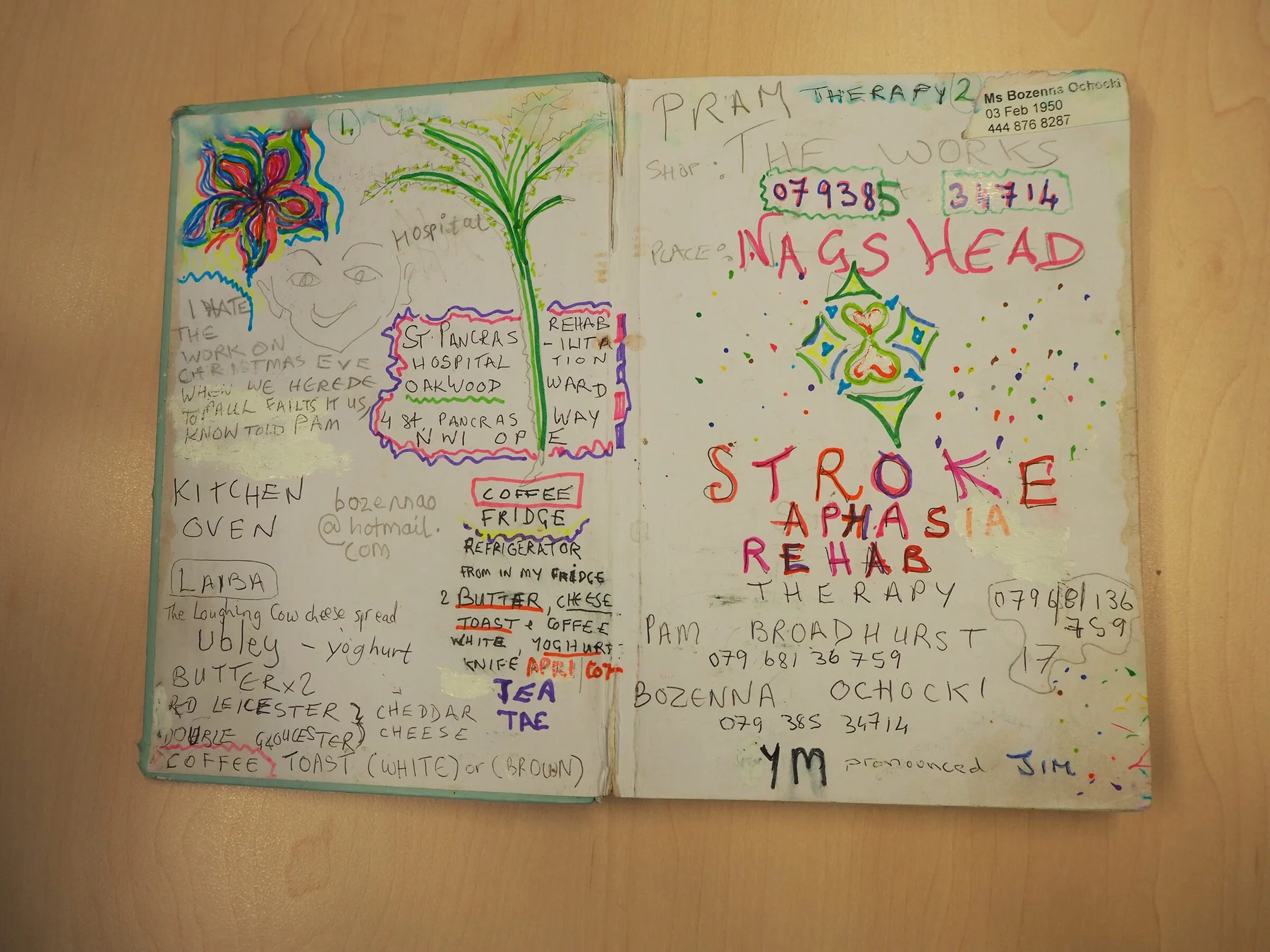
Zuzenna is a stroke survivor living with aphasia — and an outlier. Rather than abandoning AAC, she created her own: a self-made communication diary built from photographs, cut-outs, hand-drawn symbols, ticket stubs and memorabilia — entirely on her own terms.
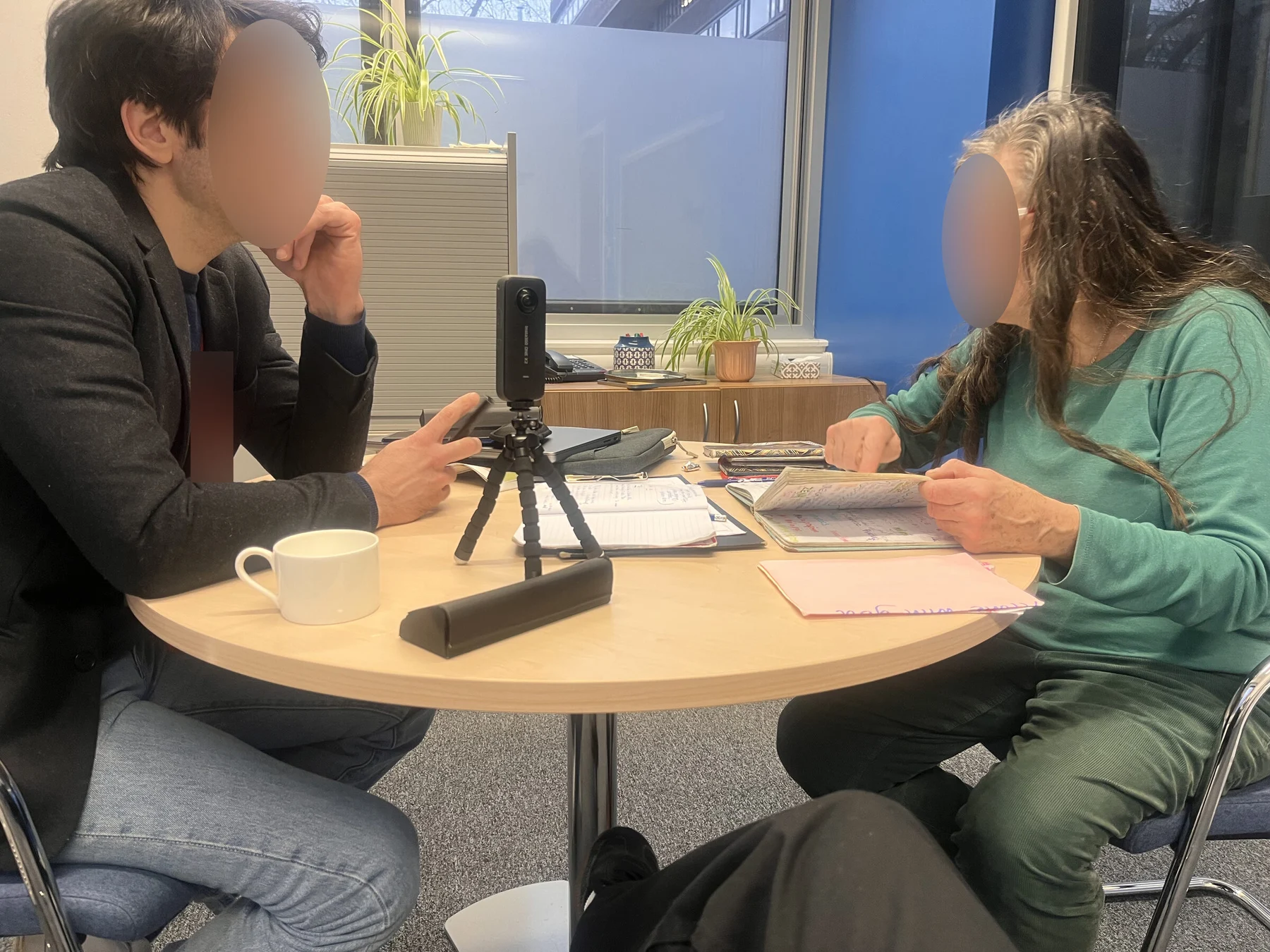
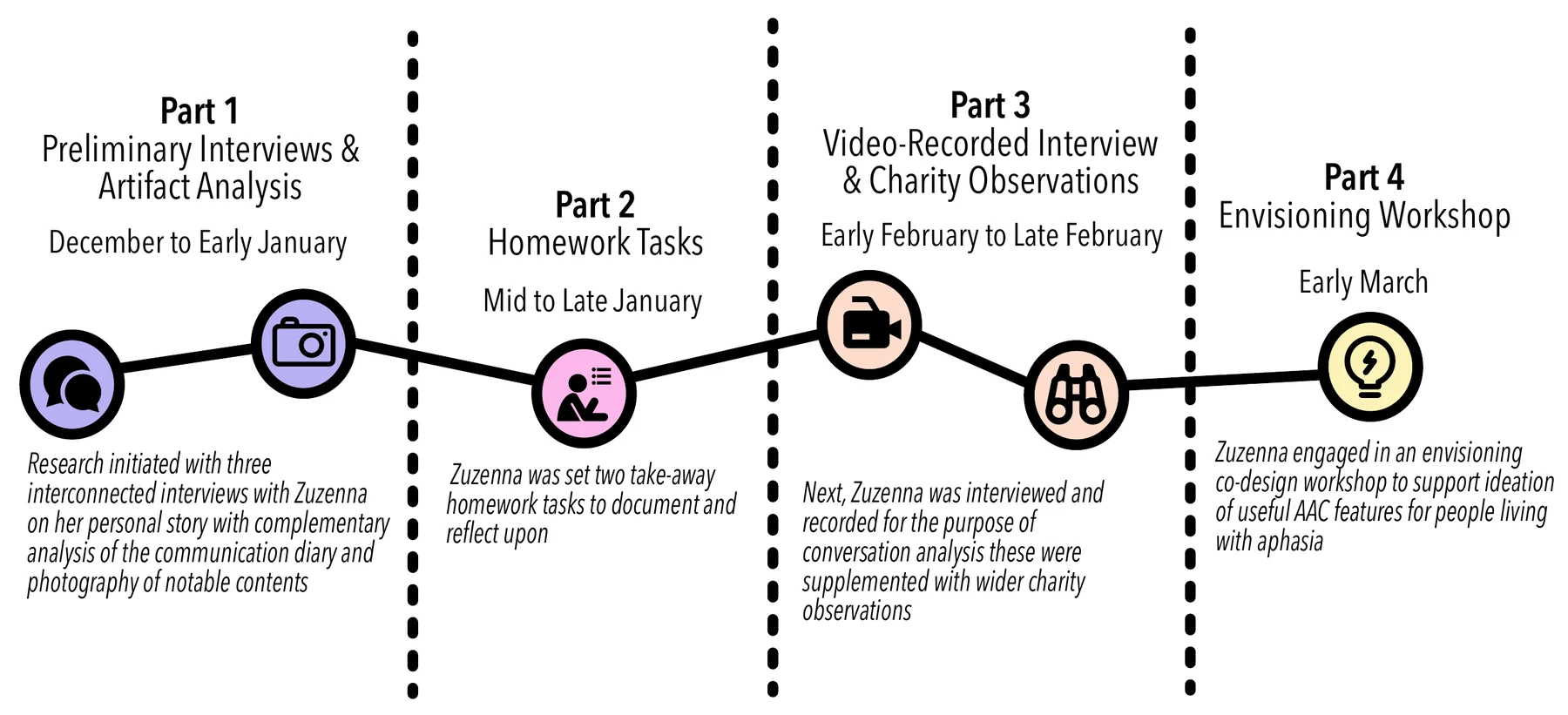
A four-month qualitative study (December 2024 – March 2025) drawing on conversation analysis, video footage and an envisioning workshop. Monthly sessions analysed the diary across everyday scenarios: ordering coffee, medical appointments, storytelling, advocacy. Video recordings revealed moment-by-moment detail — how searching for a word naturally slowed conversation, signalling her partner to pause without Zuzenna needing to say a word.
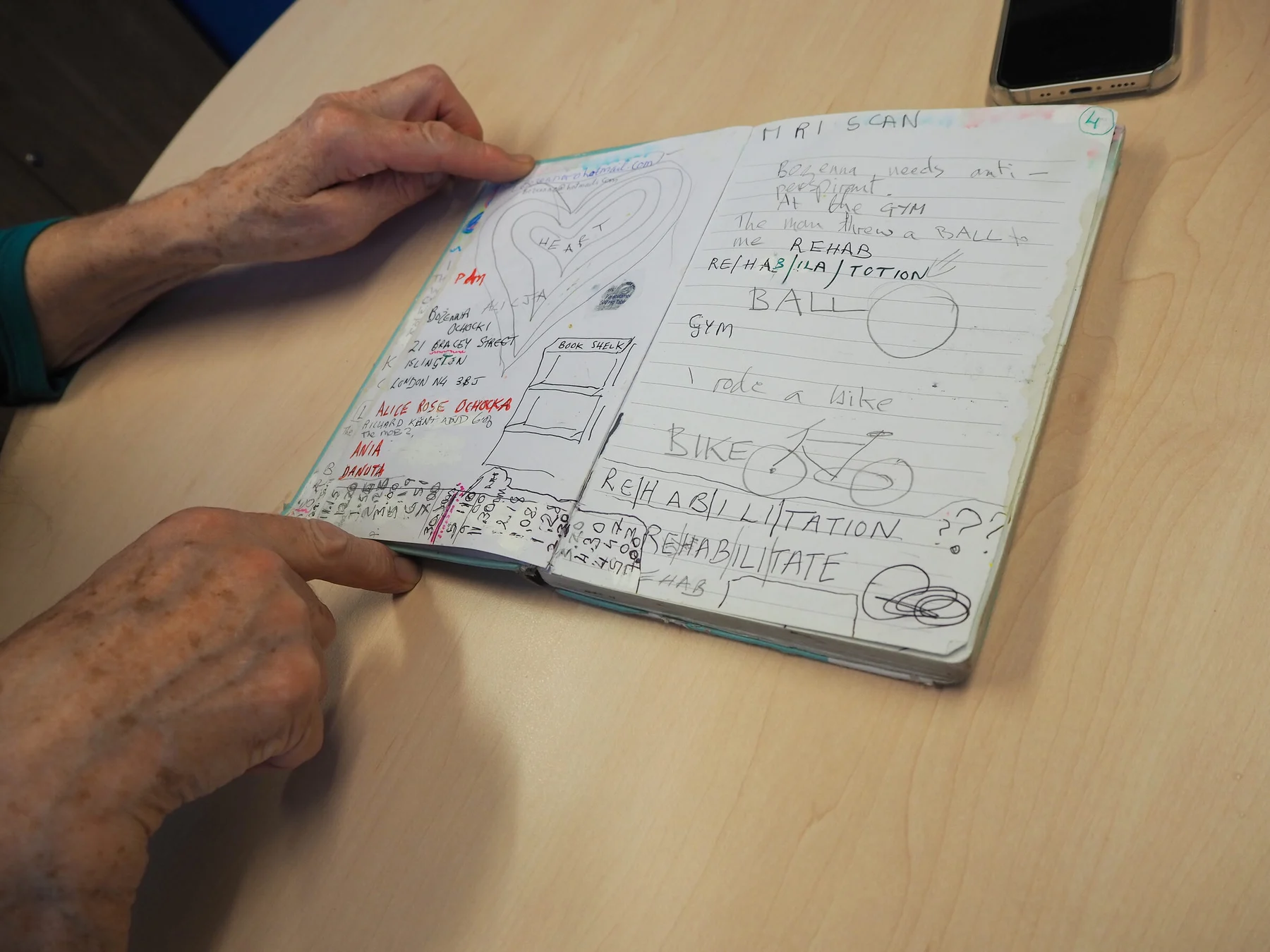
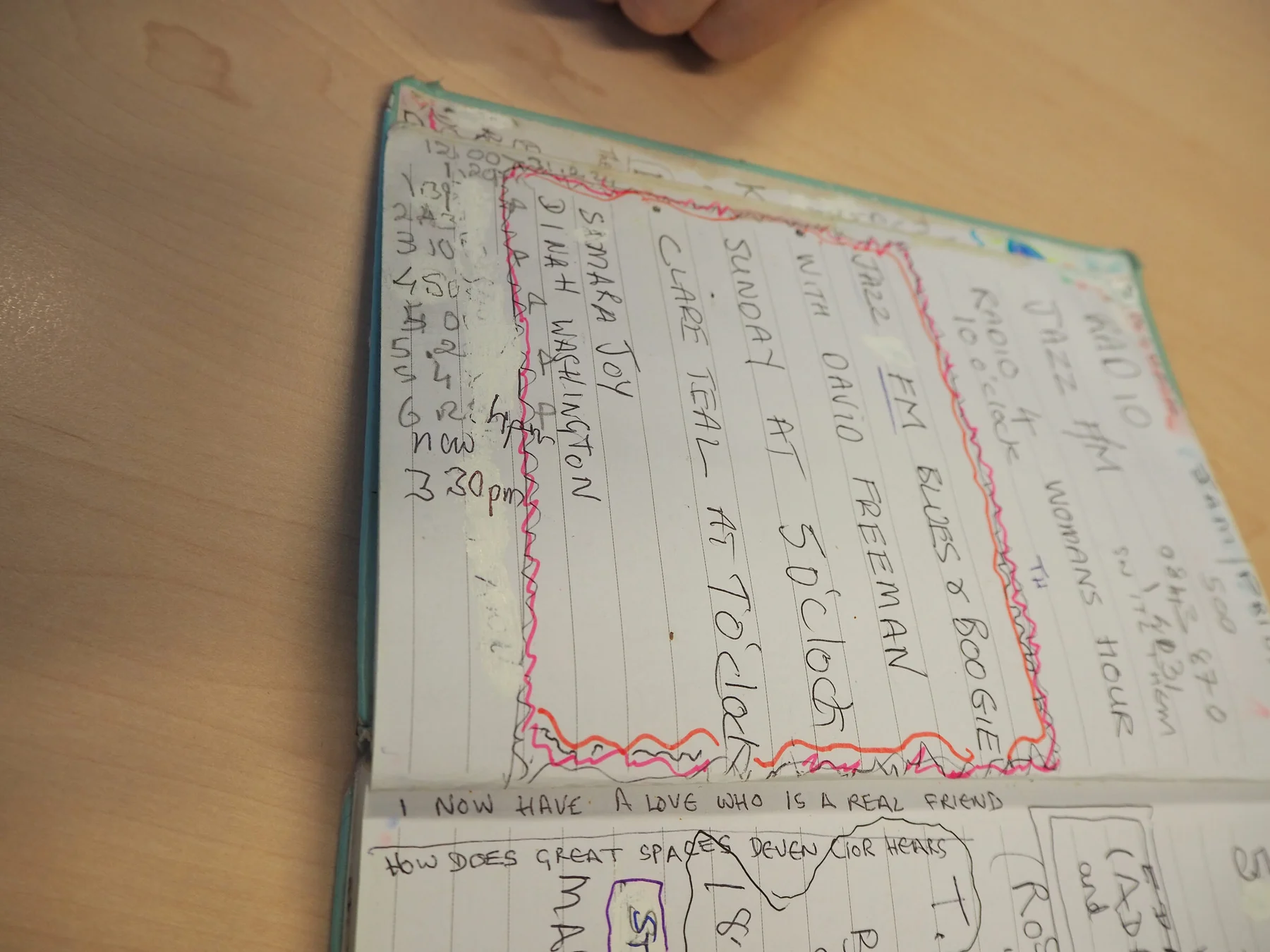
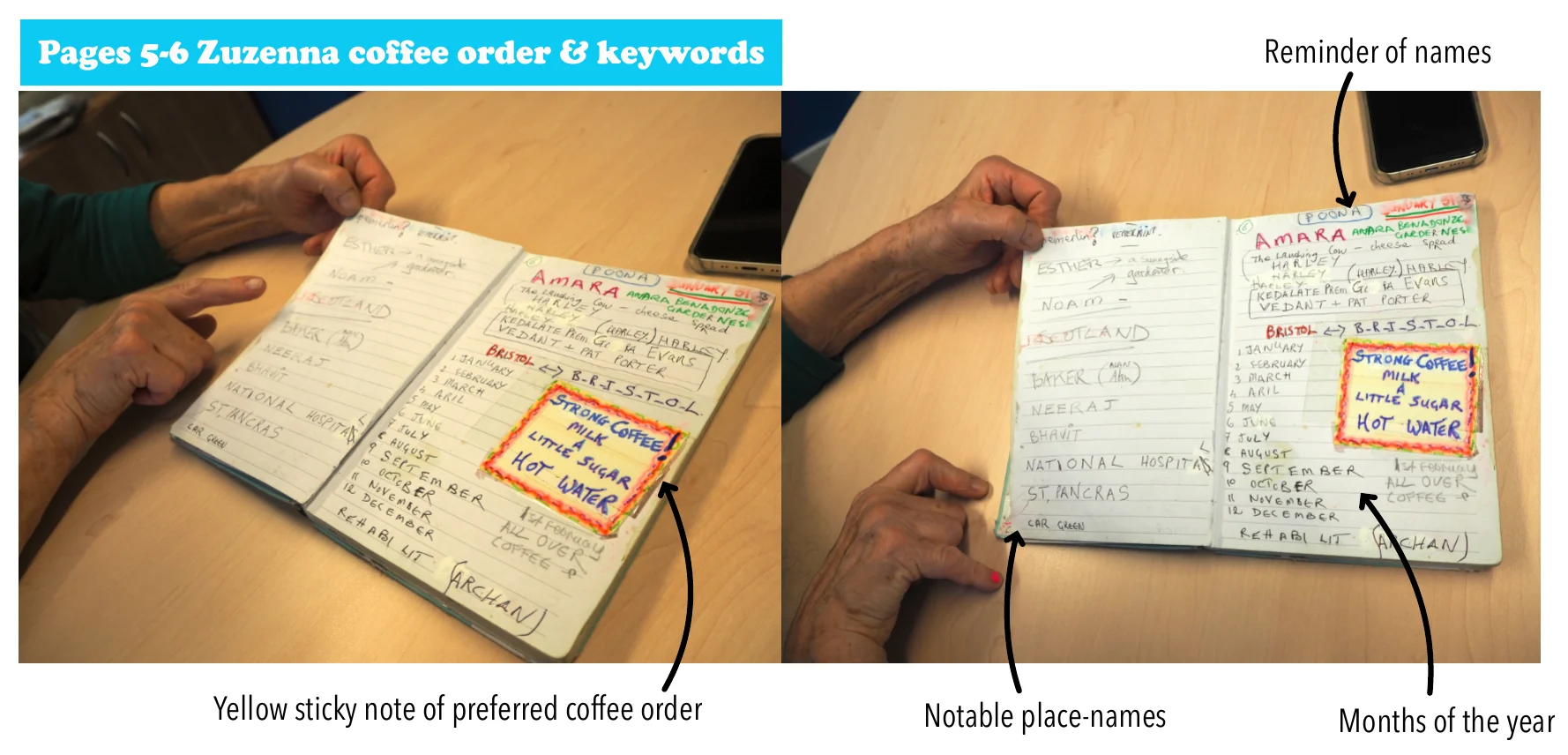
The diary was added to, rearranged and annotated across sessions — recording therapy contacts alongside jazz nights, music, friends and travel. Crucially, it is non-stigmatising: to an uninitiated observer it appears as nothing more than a notebook, blending naturally into social environments without drawing attention.
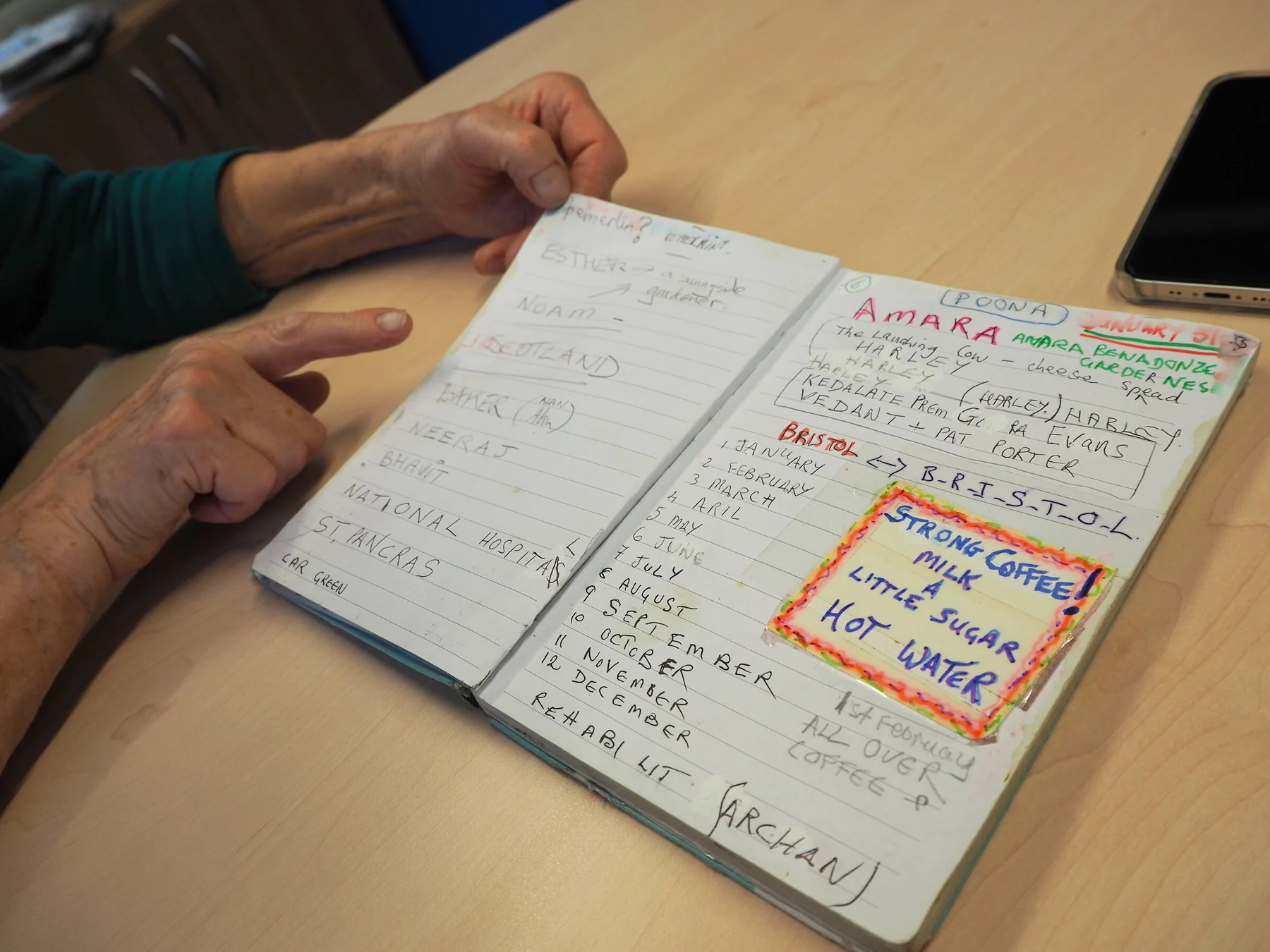
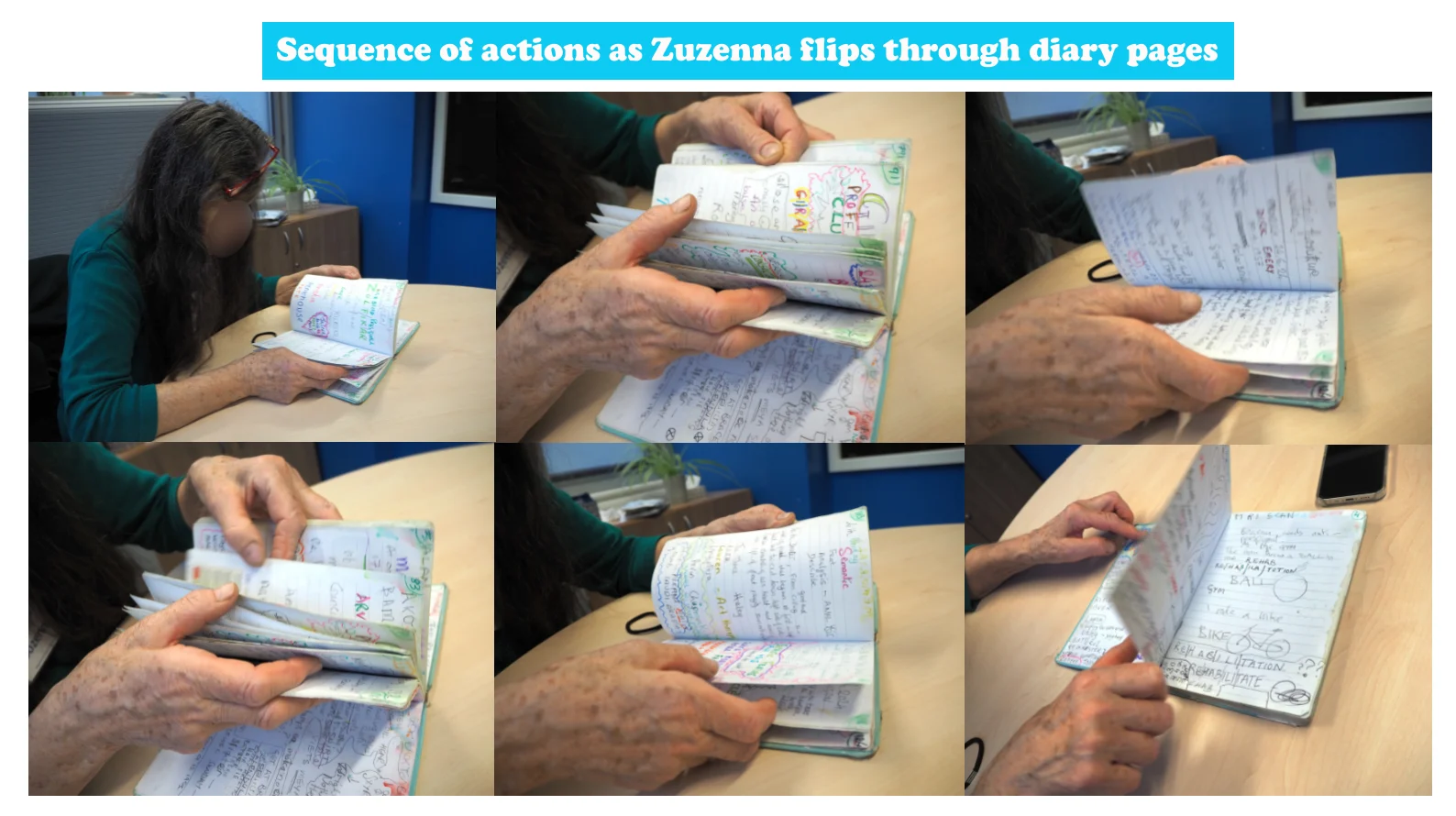
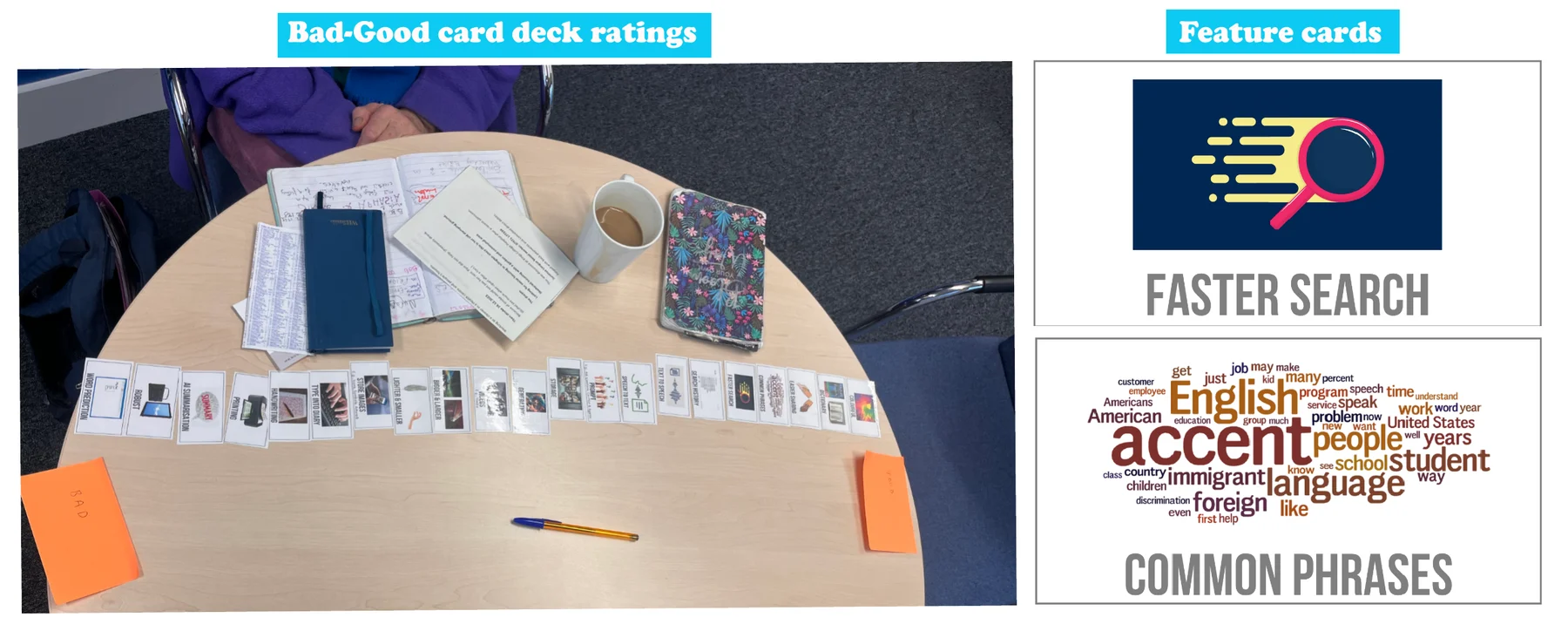
Photography documented improvised fixings, layered media and the way colour and scale signal meaning. In the envisioning workshop, Zuzenna ranked colourful as the most important AAC feature. The diary's familiar book format generates intrigue — inviting communication partners to explore and ask questions, with Zuzenna positioned as the storyteller.
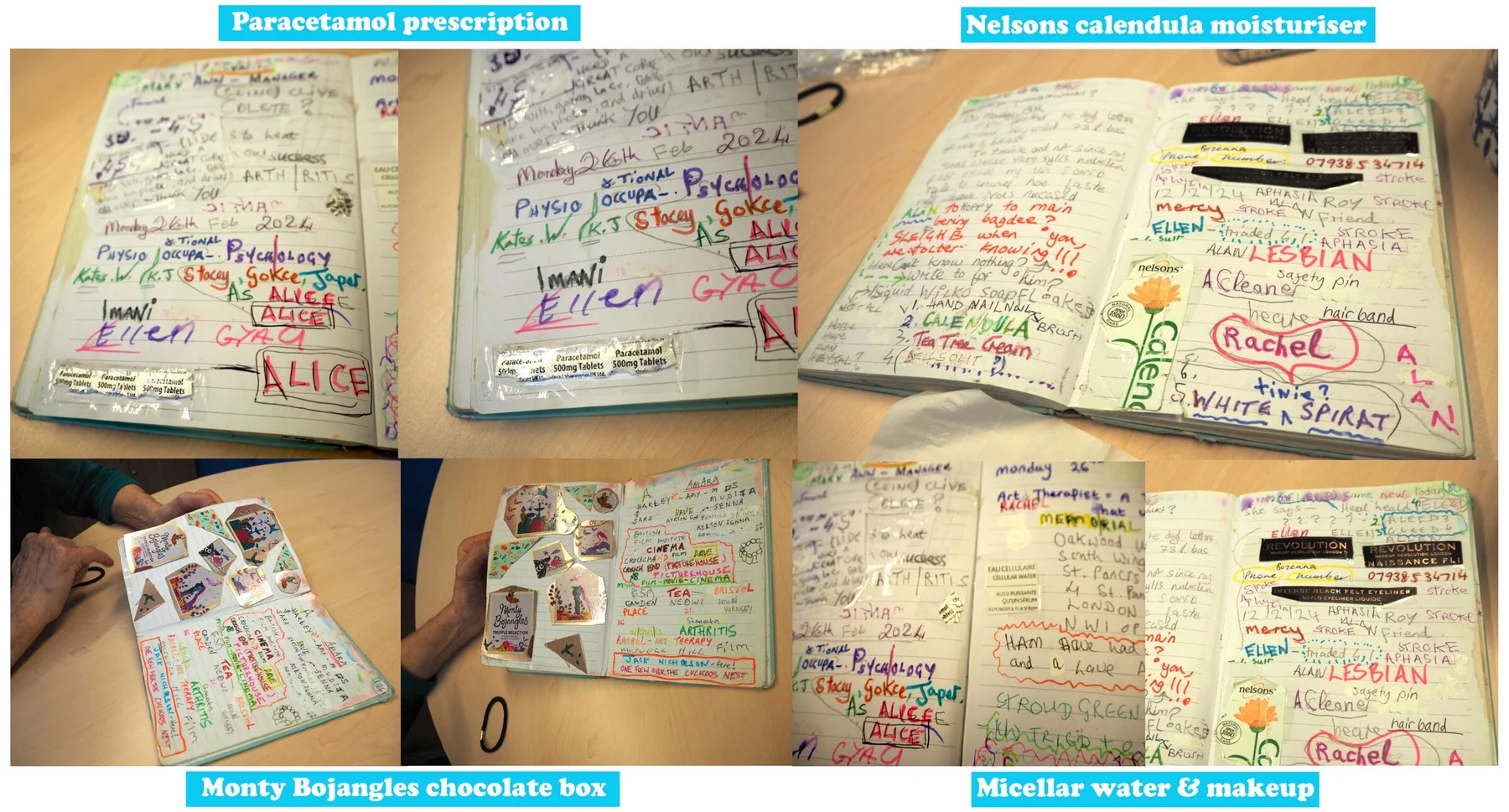
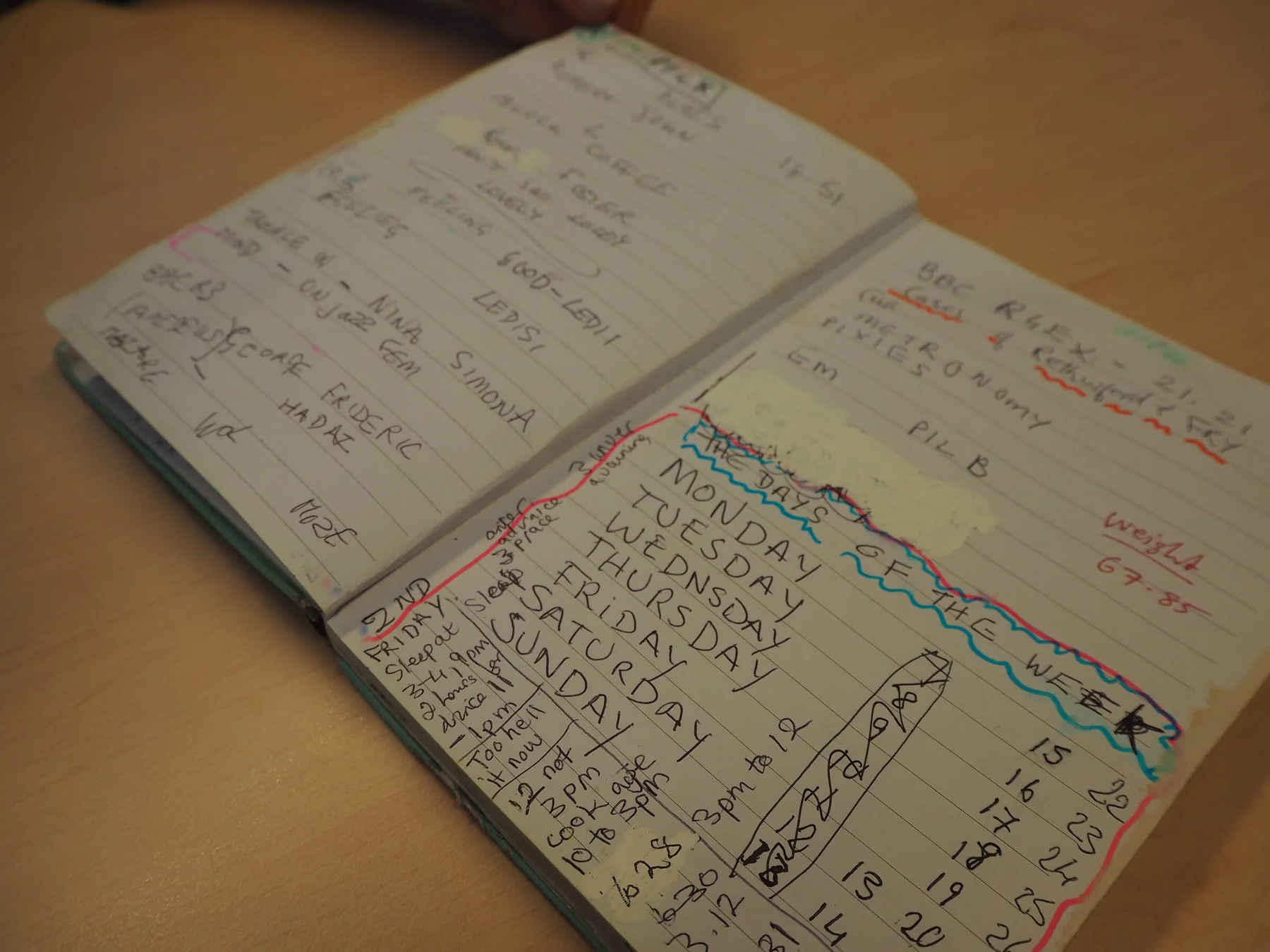
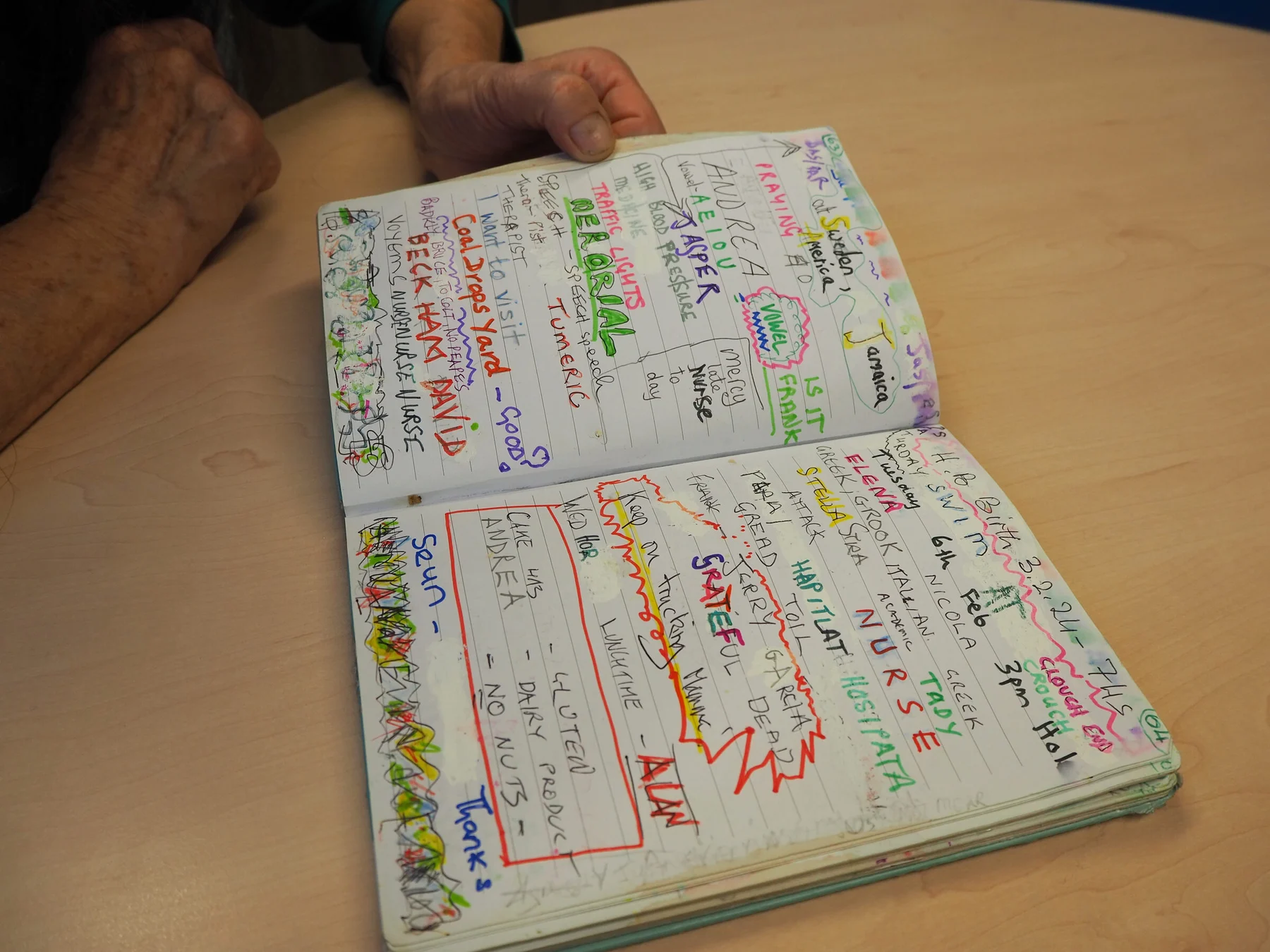
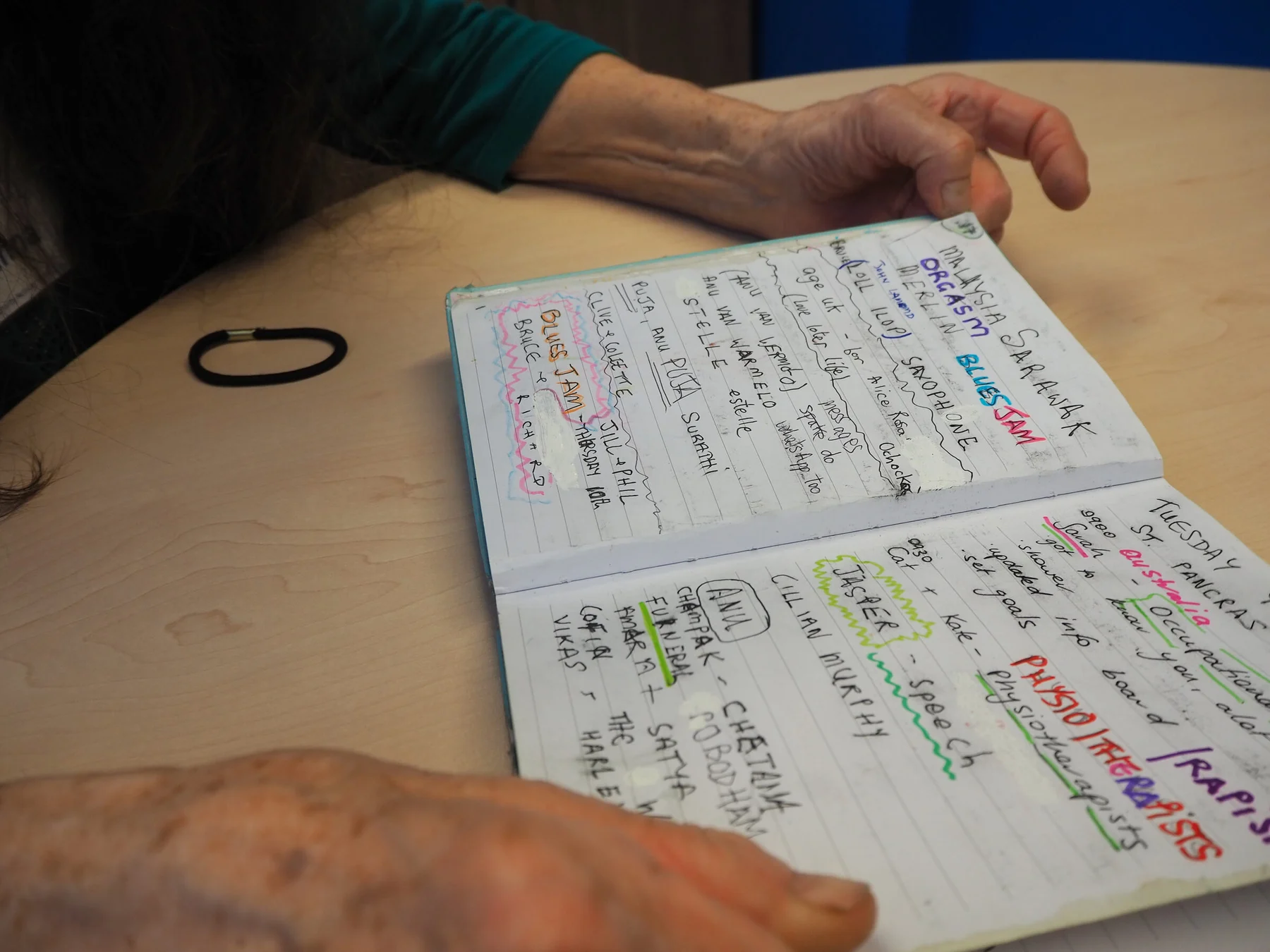
Analysis identified three themes. Fostering communion: unlike commercial AAC, the diary can be physically handed to others — acting as a conversation starter and inviting participation. Expression and agency: Zuzenna insisted on absolute authority over the diary, firmly rejecting printing or duplication — contrasting sharply with standard AAC prescription, where professionals often edit devices without the user's awareness. Valuing personal labour: the pages trace the arc of recovery — from early coffee-order stickers to letters advocating for improved housing in her borough. We caution against AI-driven AAC that erases this labour by reframing entries to algorithmic norms rather than preserving individual voice.
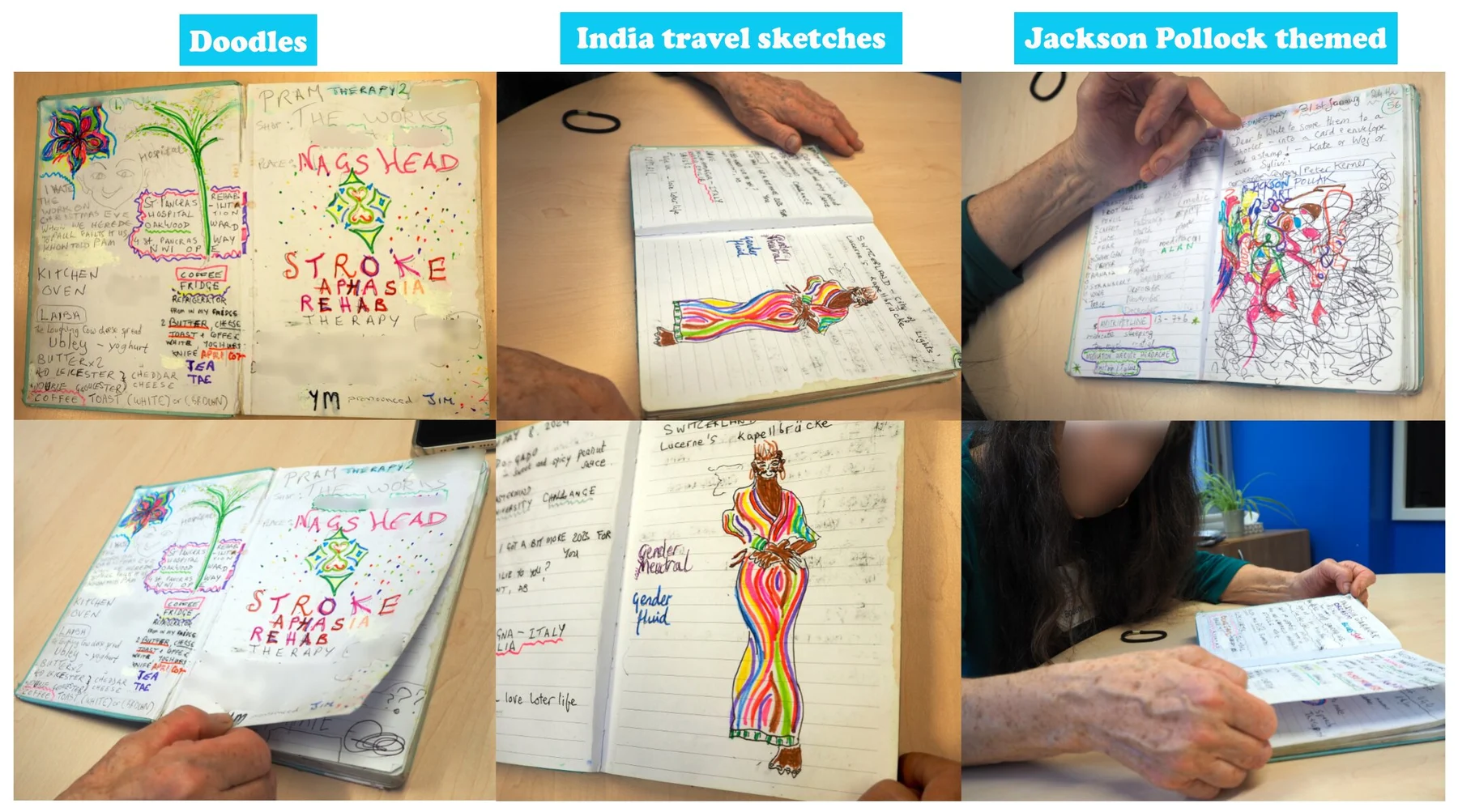
Zuzenna's diary shows that AAC does not have to be techno-centric or expensive to be powerful — it just needs to be personal. Presented at ASSETS 2025 in Denver. The video figure below was shown as part of the presentation.